Friday, March 10, 2017

Clocks Set to Noon When Time Zones Began

It’s called “The Day of Two Noons.” On November 18, 1883, the four time zones across the United States officially began when clocks were reset to precisely 12:00 noon.

Time zones and Standard Time came out of the necessity of railroads to stay on schedule. Train travel kept improving, shrinking the time between cities, and requiring precise arrival and departure times.

Several competing railroad lines crisscrossed the United States. It was a fast-growing industry that moved people and freight each day over thousands of miles of rail lines that covered North America by the 1880s.

Each community the railroads serviced used their own local times within the same state and often between towns that were only a few miles of each other. The complicated time schedules of each railroad line confused travelers. The different railroad companies worked together to end the confusion of dealing with thousands of different times. The competing railroads collaborated to create what became known as Standard Time across the nation.

The railroads looked to the British Empire’s use of Standard Time as an example of how to make the time zone system work. Great Britain was years ahead of America in making time schedules uniform. British railroads were using a standard time system 36 years before American railroads took the lead in 1883.

American railroads established four time zones that crossed the United States one hour apart from each other with the eastern states beginning each day four hours earlier than the western states. Following the movement of the sun, the four zones each covered approximately 25 percent of the country. The railroads named them the Eastern, Central, Mountain, and Pacific time zones.

American railroads coordinated the extremely complicated time changes on that November day in 1883 when all railroad clocks and many thousand city clocks began Standard Time for their particular zones. 

On November 18th, each clock in the Eastern Time Zone was reset to 12:00 noon when the sun was at its highest position in the sky, making that the second time the clock showed noon. Precisely 60 minutes later, clocks in the Central Time Zone were reset at noon. Clocks in the Mountain Time Zone were next, and “The Day of Two Noons” completed its four-hour trek across the continental U.S. in the Pacific Time Zone when clocks there moved to noon.

Within a year, 85% of all U.S. cities with populations of more than 10,000 (approximately 200 cities) used what became known as Standard Time. But paving the way and shouldering the expenses of starting four time zones remained with the commercial railroads for more than 34 and a half years.

Image result for Interstate Commerce CommissionThe U.S. government finally took over the responsibility of administrating the time zones with the Interstate Commerce Commission when the U.S. Congress made the Standard Time Act a law on March 19, 1918. 

The country’s railroads regulated themselves for more than 34 years concerning the use and revenue requirements of the continental time zones. That would be unheard of in today’s society. The necessity of time zones keeping an accurate measurement of time as the sun passes across our continent extends to all activities in our society. 

Monday, February 27, 2017

Next U.S. State Will be an Archipelago

Alaska became the 49th American state on January 3, 1959. On August 21st that same year, Hawaii joined the United States as state number 50. Both of the last two states are geography unique in that they are located outside the contiguous union of 48 states whose borders touch each other. 

The 50th state has the distinction of being the first “archipelago” which is a nation made up of a group of islands or an island chain. Many of the U.S. territories that are properties of the U.S. are archipelagos. These 16 areas are properties of the United States and are spread across the Caribbean and Pacific oceans.

Assimilating territories into the United States started immediately after the 13 original colonies became independent from England. Pioneers moved westward and slowly settled the land mass that stretched from the East Coast to the Pacific Ocean border.

The United States claimed areas through negotiations and military victories with foreign countries. These areas were first identified as territories and were slowly accepted into the U.S. as states. Arizona, once a territory, came into the union as the 48th state in 1912.

Five of the current U.S. territories are populated and are self-governing. Residents of the territories pay no income taxes. They can’t vote in U.S. presidential elections but they each have one nonvoting member of the House of Representatives.


Puerto Rico, the largest territory in area as well as in population, has been considered to be the next territory for statehood. Guam is a distant second place contender to join the union only because 29 percent of that island is covered with American military who manage hundreds of aircraft stationed there for American defense.

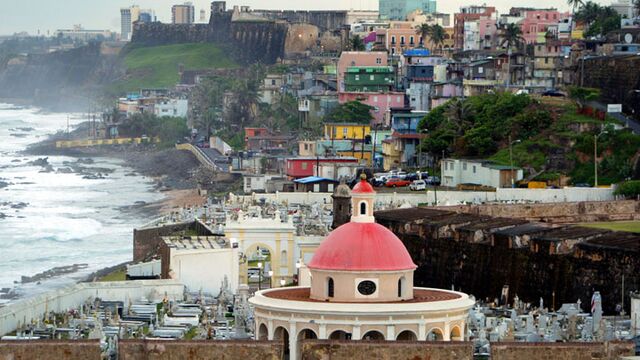
Puerto Rico’s 143 islands are located in the northeastern part of the Caribbean Sea. Except for the main two islands, most of Puerto Rico consists of tiny islands, cays and islets. The population of approximately 3.474 million people is much higher than all the other territories combined. Total population for all the 16 territories totals slightly more than 4 million people.


With an area of 3,515 miles, Puerto Rico’s economy is poorer than any U.S. state, and that inhibits the U.S. Congress from extending an invitation to Puerto Rico to seek the 51st state position. The federal income tax that would be generated by Puerto Rico would not come near the expenses the U.S. would spend to provide the social, military and economic benefits all states get from the central government.

Related imagePuerto Rico’s per capita income in 2016 was $27,340.00. That’s well below Mississippi that had the poorest economy of any state last year with a per capita of $32,967.00. A poor economy and a population that speaks primarily Spanish prevent any serious attempts to get Puerto Rico to join the U.S. union. Becoming the 51st state would include the political power of two U.S. Senators and one U.S. Representative as well as full voting rights.

Opinion polls during the last half dozen years show a strong movement among Puerto Rican residents who want to become U.S. citizens. The popularity of speaking English has made it an unofficial second language. Improvements in Puerto Rico’s economy during the next decade will keep politicians looking to that archipelago for possible statehood.

The other three territories that have permanent populations are the U.S. Virgin Islands, the Northern Marianas Islands, and American Samoa.

Eleven territories have no populations and are small islands, atolls and reefs spread across the Pacific Ocean and the Caribbean Sea. They offer no economic advantage to the federal government. For all purposes, they will never be developed into any useful land masses. Those tiny territories are Palmyra Atoll, Baker Island, Howard Island, Jarvis Island, Johnston Atoll, Kingman Reef, Midway Island, Bajo Nuevo Bank, Navassa Island, Serranilla Bank and Wake Island.

Saturday, February 4, 2017

Prohibition: the Noble Experiment Failed

Supporters of the 18th Amendment to the U.S. Constitution attempted to eliminate booze from American society 97 years ago. Called the “Noble Experiment”, Prohibition prevented the production, sale and transport of intoxicating liquors throughout the United States starting in January, 1920.

Prohibition ended nearly 14 years later with the enactment of the 21st Amendment. That amendment stopped Prohibition and marked the first time a constitutional amendment was repealed. The years that Prohibition existed were filled with gangland violence, crooked law enforcement, and millions of dollars lost in tax revenues not collected for liquor sales. President Herbert Hoover popularized the term the Noble Experiment in describing Prohibition even though it was law nine years before he served his one term in office.

Ironically, the act of drinking alcohol during Prohibition remained legal, so people could drink and even share their booze with family and friends inside their homes as long as they didn’t charge for it or transport it for sale.

Supporters of Prohibition pushed for what they called a “dry society” that would not consume alcohol. Usually based on religious revivalism that swept the United States during the late 1800’s and early 1900’s, the anti-liquor groups preached that drinking alcohol affected the morality of society in general and specifically damaged the structure of American families.

A small group of prohibition zealots went into neighborhood taverns where they smashed bottles off the walls while customers scattered for their lives. One well known supporter of violent moves against taverns was Carry (sometimes spelled Carrie) Nation.

She was a renowned anti-drinking leader who began her agenda against alcohol primarily in Kentucky and Missouri in the early 1900’s. As her influence and notoriety grew, Nation organized parades and gained supporters in major cities in the eastern part of the country such as New York and Boston.

She promoted temperance (abstinence of drinking alcohol) and addressed groups of likeminded people. Nation encouraged nondrinkers, who called themselves “teetotalers”, to copy her violent methods to stop the sale of alcohol that she claimed destroyed American families.

She and several teetotalers would attack saloons and liquor stores by barging in and smashing bottles of alcohol and barrels of beer. It was a wild scene whenever Nation and her mob of supporters waved hatchets and crowbars as they screamed their hatred of alcohol.

Nation, an imposing figure standing six feet tall in a long, black dress, would shout at the patrons who typically bumped into each other as they ran for the exit. She was arrested and jailed several times for destroying property and injuring bystanders.

A hatchet Nation used to smash bottles became a symbol of her temperance campaign. She began selling hatchets to people in the crowds that gathered when she spoke about God’s desire for a dry society. She used the money from selling her symbol of temperance to fund her anti-drinking campaign. She died in 1911, nine years before the 18th Amendment became law. She was 64 years old.

The 18th Amendment did not specify the content of alcohol beverages. In the fall of 1919, the U.S. Congress passed a rider to the 18th Amendment. Called the “Volstead Act”, it was a law passed by both houses of Congress and was designed to carry out the intent of Prohibition. The Volstead Act spelled out particular rules that included a .5% limit of alcohol content in beer that could be consumed.

The 18th Amendment and the Volstead Act often are referred to incorrectly as the same thing. Congress approved the Volstead Act in October of 1919 after the 18th Amendment was ratified January of that year. The amendment and the Volstead Act became active at the same time in January, 1920.  

Andrew Volstead was chairman of the House Judiciary Committee. He managed the legislation that was drafted from a bill written by a special interest group called the Anti-Saloon League. The Volstead Act was designed to give the enforcement needed to make Prohibition work. But the law had loopholes and exceptions that weakened its intent.

Physicians could prescribe whiskey for medicinal use, and Volstead’s law allowed the use of alcoholic beverages in religious rituals. Also, the law permitted storing a large supply of alcohol for use in scientific research and in the development of fuel, dyes and other industrial practices. And citizens could make up to 200 gallons of wine a year for personal use.  

Large shipments of liquor could be bought outside the U.S. and smuggled past authorities who accepted bribes to look the other way. The easy access to liquor in large supplies encouraged organized crime to develop an industry that catered to people who wanted booze. Criminal gangs ranging in size from small, neighborhood crooks to nationally known gangsters sold illegal alcohol that made profits reaching hundreds of millions of dollars a year.  

The country’s economy went into a steep dive during the Great Depression that started in May, 1929. But even with an unemployment rate reaching past 25%, the illegal sale of liquor continued to grow.
Over time, the social acceptance of drinking and the violence of organized crime weakened the public support of Prohibition. Franklin D. Roosevelt fought against Prohibition during his presidential campaign.

Roosevelt defeated incumbent President Herbert Hoover and took office March, 1933. The 18th Amendment and the Volstead Act both were abolished on December 5, 1933. The president toasted his success in legalizing booze with a martini, his favorite drink.

President Roosevelt (right), with former President Hoover
The Noble Experiment to stop people from drinking alcohol was a failure. Repealing Prohibition was a direct result of the crime and corruption that occurred during the more than 13 years it was law. Thousands of people lost jobs related to the beer and alcohol industries. The national economy suffered while gangsters became rich as they supplied people with the liquor they wanted.

The 21st Amendment gave back to the individual states their authority to regulate booze consumption. Once again, Americans had the personal freedom to decide to consume alcohol or not based on their own preferences. 

Sunday, January 15, 2017

Shorter Lame Duck Period for Outgoing President Helps Smooth Changeover

The Presidential Inauguration on January 20, 2017, will make Donald J. Trump the 45th president of the United States. Michael R. Pence will be his vice president.

This will be the 58th U.S. Presidential swearing-in. The time between the November election and the inauguration of a new president is called the incumbent’s Lame Duck period. Until the mid-1930’s, the incoming president waited nearly four months before he replaced the outgoing president.

The last president to wait nearly four months to get sworn in was Franklin D. Roosevelt on March 4, 1933, when he replaced Herbert C. Hoover, a one-term president.

During Roosevelt’s first administration the U.S. Congress passed the 20th Constitutional Amendment that changed the time of the Inauguration to the 20th day of January. This shortened the Lame Duck period by six weeks.   Roosevelt started his second term in January in accordance to the new amendment.

An extended presidential transition period of almost four months made sense during the country’s first 150 years of elections when mass communications and fast transportation methods didn’t exist.

But the first part of the 20th Century brought radio and television news into the homes of most Americans. Improved roads to accommodate the growing number of motor vehicles used privately and commercially made travel time easier and faster. Commercial air travel made coast-to-coast and even international travel practical. These modern advances showed the need to shorten the time needed to install a new administration.

Evidence that the country needed her new leader to take charge quicker after the election became evident when President Elect Roosevelt and incumbent Hoover struggled to change the country’s top executive. Both men wanted to solve the country’s economic problems. A Wall Street crash that started in May, 1929 set the country into the Great Depression. Hoover’s attempt to allow the economy to correct itself failed, and more than 25% of the population suffered unemployment.

Roosevelt campaigned with a philosophy that promoted his New Deal—a set of government programs that created jobs to get the population working. He campaigned with his plans to bring relief, recovery and reform to the unemployed population. Roosevelt encouraged the growth of labor unions and close regulations of business and national banks.

Hoover’s political stance promoted an economy based on voluntarism that encouraged individualism and self-reliance. He emphatically warned that Roosevelt’s plans would push the U.S. towards Communism with its strong governmental controls.

Hoover’s administration didn’t improve the economy fast enough to satisfy the citizenship. Roosevelt dominated the 1932 election with 472 electoral votes compared to Hoover’s 59 votes. The popular votes totaled 57% for Roosevelt (Democratic Party) and 39.6% for Hoover (Republican Party). 

President Elect Roosevelt met with Hoover at the White House at least three times during the Lame Duck period. The two men didn’t agree on most things that would help bring the country out of the poor economy. The discussions became more and more contentious, and they accomplished nothing to help the citizens who needed relief from the depression.

It was a time of leaderless government. The U.S. economy ground to a halt as thousands of banks failed. The country’s economy needed leadership to move it in an improved direction during the Lame Duck period, but both men refused to do anything that would make the other look good.

Hoover and Roosevelt
riding to Roosevelt's inauguration
Historians reported that their mutual dislike grew to the point that they wouldn’t speak to each other when they rode side-by-side in the back seat of an opened convertible that carried them down Pennsylvania Ave. to Roosevelt’s swearing-in.

Recent decades show the passage between old and new presidential administrations usually goes smoothly with a cordial air between the two parties. A professional changeover between the outgoing and incoming presidents coupled with a shorter Lame Duck period help the country’s citizens get the best from a major management change in the executive office.  Come back to this space later this month to read another interesting blog.  


Thursday, December 1, 2016

Japan Attacked America and Started WWII 75 Years Ago

The Imperial Japanese Navy launched an unprovoked attack on Pearl Harbor, Hawaii, December 7, 1941. The next day, President Franklin Roosevelt faced an emergency gathering of the U.S. senators and representatives to declare war against Japan and later Germany and Italy.

More than 16 million American servicemen and women participated in WWII, according to the U.S. Department of Veterans Affairs. A canvass conducted by the federal office during the first quarter of this year listed only 620,000 veterans of the war remain alive.

To honor the men and women who fought and many who died defending America, I posted a blog about the Pearl Harbor attack in November, 2014.  In alignment with the upcoming 75th anniversary of the attack on Pearl Harbor, I am sharing that blog post again here. 

World War II began without warning for the United States on December 7, 1941.  A surprise attack from the Empire of Japan started the war during a beautiful Sunday morning on the Hawaiian island of Oahu, the home of the U.S. Pacific Fleet in Pearl Harbor.

A clear sky with a warm day looming made it promising to spend time outside on a golf course or a tennis court.  Instead of providing for a day of leisure, the weather gave perfect conditions for a flight of fighter airplanes to find their way from an aircraft carrier hundreds of miles off shore.

Minutes before 8 a.m., Japanese fighter planes began dropping specially designed torpedoes into the harbor. The torpedoes were set to run only 35 feet deep to be effective in the shallow water.  Delivered with deadly accuracy, the underwater, powered bombs were fired from the first wave of 83 aircraft sent from one of six aircraft carriers.

An armada of 30 warships including the carriers traveled undetected for thousands of miles from the Land of the Rising Sun.  An attack force of 423 fighter/bomber planes rested on top of the carriers and remained undetected during the attack that lasted less than two hours. The fighters had to fly almost 90 minutes from the carriers to reach Pearl Harbor.

The element of surprise worked perfectly for the Japanese. Their fighters were able to cross several miles of ocean, follow the terrain of the island and find the harbor without any resistance from the Americans.

Ironically, one Army private saw the first wave of planes crossing Oahu. He and another soldier were manning a remote radar station. It was used to give advanced warning to the U.S. Fleet of possible enemy planes. When he saw the large flight of planes on the radar screen, he called in the sighting. The radar intelligence office instructed the soldier to ignore them. The radar blips, the officer said, were a flight of B-17 bombers that were expected to fly into Hawaii that morning.

Eight U.S. battleships were stationed in the harbor.  All of them were damaged by torpedoes.  The Arizona and the Oklahoma were destroyed.  Six battleships eventually returned to service after repairs.

The Arizona sank with 1,000 men on board. A memorial of a white concrete and steel structure spans the hull of the sunken ship. It was dedicated on May 30, 1962, to honor the Americans who died in the attacks in 1941.

More than 180 American aircraft were destroyed. Few American planes left the ground. Clustered in tight groups on the airfield, they were sitting ducks for Japanese bombs and machine guns.

The second wave of planes left the attacking carriers with the intent of damaging other ships and shipyard facilities.  Storage tanks holding thousands of gallons of fuel were targeted by the invading planes, but the precious gasoline was not destroyed.

The prime targets wanted by the Japanese consisted of the three Pacific Fleet carriers—the Lexington, Enterprise and Saratoga.  Fortunately, the U.S. aircraft carriers were on maneuvers, many miles from Pearl Harbor. They were safe from the invasion.

By 9:45 a.m., the Japanese inflicted enough damage to cripple the U.S. fleet.  The attackers’ original plan was to send in a third wave of planes to finish off the remaining equipment and the vital fuel supply on Pearl Harbor. The Japanese admirals argued about continuing the attack, because they didn’t know how close the missing American aircraft carriers were to Hawaii. The Japanese had plenty of airplanes and ammunition to complete the attack against the U.S., but the admirals made a mistake in leaving without finishing the job.

The United States government and the government of Great Britain declared war against Imperial Japan the next day.  On December 8, 1941, President Franklin D. Roosevelt made the announcement to a joint session of Congress that the United States was going to war. 

The war would surely have lasted longer if the Japanese had taken their element of surprise to the next level and wiped out Pearl Harbor. Most historians agree that the end of the war would have taken longer but still have the same results even if the attack on Pearl Harbor had been more destructive.

One leader of the Japanese Navy, Admiral Isoroku Yamamoto, was the main officer in the attack on Pearl Harbor.  While the armada retreated from American waters he described the situation best in facing the United States entering the new war:

“I fear all we have done is to awaken a sleeping giant and fill him with a terrible resolve.”

Thursday, November 24, 2016

Japanese Midget Subs Used in Pearl Harbor Attack

New facts have surfaced about the role of small submarines the Japanese used in the surprise bombing on Pearl Harbor. That unprovoked attack pushed the United States into WWII 75 years ago.

Military officials always acknowledged that five midget submarines were part of the surprise attack. Until recent years, however, those historians believed that the small underwater boats failed to inflict any damage to the U.S. fleet stationed on the Hawaiian island of Oahu.

Research discoveries from underwater explorations conducted by two respected broadcasting companies—The History Channel and the Public Broadcasting Service (PBS)—recently uncovered new evidence that led to speculation about the damage inflicted to at least one U.S. battleship.

Japanese Zeros launched from aircraft carriers
This evidence includes newly obtained aerial pictures taken by the pilots of Japanese fighter airplanes, called Zeros, during the attack. The pictures show that two of the small submarines sailed into the harbor and one of the midget subs succeeded in helping to sink the USS Oklahoma. The USS Arizona was sunk inside Pearl Harbor by torpedoes launched from Zeros.

Six other battleships sitting helplessly on battleship row were badly damaged. The damaged ships were repaired and later participated in America’s naval war against Japan.  

Hundreds of pictures were taken by the attacking aircraft and by Americans on the ground during the Sunday morning attack on December 7, 1941. Photographs show the battleship USS Oklahoma exploding upwards before it capsized and sank into the harbor. That evidence plus grainy, out-of-focus pictures from attacking Zeros, indicate at least one torpedo launched underwater by a small submarine hit the battleship.

Because the midget subs used torpedoes with almost twice the destructive power of the ones carried by attacking airplanes, the evidence of the battleship exploding into the air has convinced some historians and photo experts that the USS Oklahoma received major damage from one of the midget submarines.

USS Oklahoma explosion from torpedo hit
Underwater wreckage of the fifth midget sub was uncovered near the entrance to the harbor in August, 2009. The ship’s torpedo tubes were empty, indicating they were fired and may have hit the USS Oklahoma. Bodies of the two-man crew remain inside the wreck that was too badly damaged to raise. A PBS Nova broadcast named “Killer Subs in Pearl Harbor” explores the new evidence of the effectiveness of the surprise Japanese weapon.   

USS Arizona Memorial
Photo evidence of a second midget submarine getting into the harbor shows that ship firing two torpedoes that missed any ships. The two stray torpedoes exploded into a wooden dock far behind the eight battleships sitting on battleship row.

A Japanese Armada of more than 30 ships launched a two-wave attack of fighter/bombers from six aircraft carriers positioned several miles off the coast of Hawaii. More than 400 airplanes rested on the top of the carriers.

The Imperial Naval Fleet stayed so far off shore that the airplanes had to fly almost 90 minutes to reach the U.S. target. It was an amazing feat of using stealth tactics and the element of surprise in an attack that decimated most of America’s naval fleet. More than 2,400 Americans, both military and civilian, died during the attack that began slightly before 8 a.m. Sunday.

The midget U-boats rode on top of submarines that traveled underwater and released the small subs close to the opening of Pearl Harbor. A two-man crew inside the midget submarines had to endure extreme heat that was generated by battery-powered motors that drove twin propellers.

The crew had just enough room to steer the small U-boats and operate a periscope. Most of the cabin was filled with batteries that filled the hot cabin with acrid smells and made the air inside the subs hard to breathe. The crew had very little time to get into the harbor, fire their torpedoes, and retreat to try to be rescued by the mother submarines. They could operate the subs at full power, about 22 mph underwater, for less than one hour.  

The name “midget submarines” is misleading in describing the size of the small attack subs. Measuring about 80 feet long and six feet wide, the small boats were about 1/3rd the length of a full-sized submarine. Deep water exploration submarines today are a fraction of that size. 
Midget Submarines

Each of the small submarines carried two powerful torpedoes attached on top of the ships’ hulls. The torpedoes, each measuring 18 feet long, had twice the destructive power of the ones dropped by the Zeros. Massive recoil from a fired torpedo rocked the midget subs out of the shallow harbor and left a distinctive plum of water from the twin propellers as they broke the surface.

It’s the water spray, called a rooster tail, photo interpreters saw on the captured wartime photography. That’s how they concluded that two of the small subs made the almost impossible trip into the shallow harbor, shot their four torpedoes, and then skillfully sailed out as they tried to get into deep water.

One of the subs sank near the mouth of Pearl Harbor after being hit with depth charges from American ships. Another small sub ran onto a beach on the east side of Oahu. The pilot was captured and became America’s first prisoner of war.  The submarine was put on a tour of the United States to promote the sale of War Bonds.

The Japanese planes disabled America’s entire battleship fleet but fell short of completing the job. Before sending a third air attack that would have completed the destruction to the critical equipment and thousands of gallons of fuel stored on Pearl Harbor, the Imperial Armada retreated back to Japan.

The attackers planned to destroy the three Pacific Fleet aircraft carriers that were assigned to Pearl Harbor. Fortunately, the Lexington, Enterprise and Saratoga were conducting training maneuvers thousands of miles away from Pearl Harbor.

Not knowing when the U.S. carriers were due to return, the admirals in charge of the Japanese fleet feared that their ships could be destroyed by U.S. fighter planes. Retreating before finishing the job was a terrible mistake by the Japanese attackers and an opportunity for the American forces to use their aircraft carriers in the offensive that became World War II.


Thank you for reading this blog. Look at my website at www.joevlatino.com.

Wednesday, November 2, 2016

Electoral College Selects the President, not Direct Votes

November 8th will be a long night for U.S. residents watching the election returns for America’s President, Vice President, and many state-level offices. After the last of the West Coast polls close, election officials will determine the winning presidential candidate late Tuesday night based on which states each candidate won.

A process called the Electoral College selects the U.S. president by tallying the number of political representatives that are selected per state. A total of 538 electoral votes are up for grabs among the 50 states plus Washington D.C. Whichever political party, Democrats or Republicans, wins the majority of 270 votes or more will be the winner.

Candidates Hillary Clinton and Donald Trump will be elected not by the popular votes each citizen makes but by the number of electoral votes they get. A meaning of the word “college” is a group that meets to accomplish particular duties; that’s the function of the Electoral College.

The official decision won’t be publicized until an anticlimactic ceremony is held during a joint session of both houses of the U.S. Senate and the House of Representatives on January 6, 2017. Envelopes from each state will be opened and the results of the electoral votes read aloud. The ceremony is only a formality, established long before the beginning of mass communication, since the results will be known on election night.

The Electoral College system began at the beginning of U.S. presidential politics with the 13 original states or colonies. The Constitutional Convention of 1787 established the system on September 6th of that year. Almost 3 million people populated the country then, and that was an important consideration by the U.S. Congress to establish a representative-type of election process rather than a direct democratic voting system.

1787 Constitutional Convention
Attendees at the 1787 convention went back and forth with plans to elect a president. They settled on a plan to use the state populations in selecting electors in the same way that U.S. representatives were selected. It was a method of addressing the way the population density of the country was unevenly concentrated on the East Coast, where citizens in those areas could dominate all presidential elections. They realized the population of the U.S. was going to spread westward across the country, and future states would need fair representation in selecting presidents.

Under the first use of the Electoral College, George Washington began his two terms as president in 1789.

California has the greatest number of Electoral College votes at 55. Texas is a distant second state at 38 votes. Six states and Washington D.C. get the lowest number of three electoral votes. The states each getting three votes are Alaska, Delaware, Montana, North Dakota, South Dakota, and Vermont.
Obviously, the candidates’ managers concentrate on spending their campaign funds in the states with high number of electoral votes. Their goal is to win the election by getting the majority of electoral votes.  

Two states (Maine and Nebraska) take exception to the winner-take-all method of determining the number of electoral votes each state reports and take the popular votes into consideration when selecting electoral representatives.

Many people consider the Electoral System complicated and unnecessary. Eliminating the electoral method and using the majority of the popular votes to determine the next president gets discussed every election year. Such a change would require an amendment to the U.S. Constitution. 

Thank you for reading this blog. See my website at www.joevlatino.com. 


.